DISTANT FIGURES
EDINBURGH | Portobello
16-04-2023
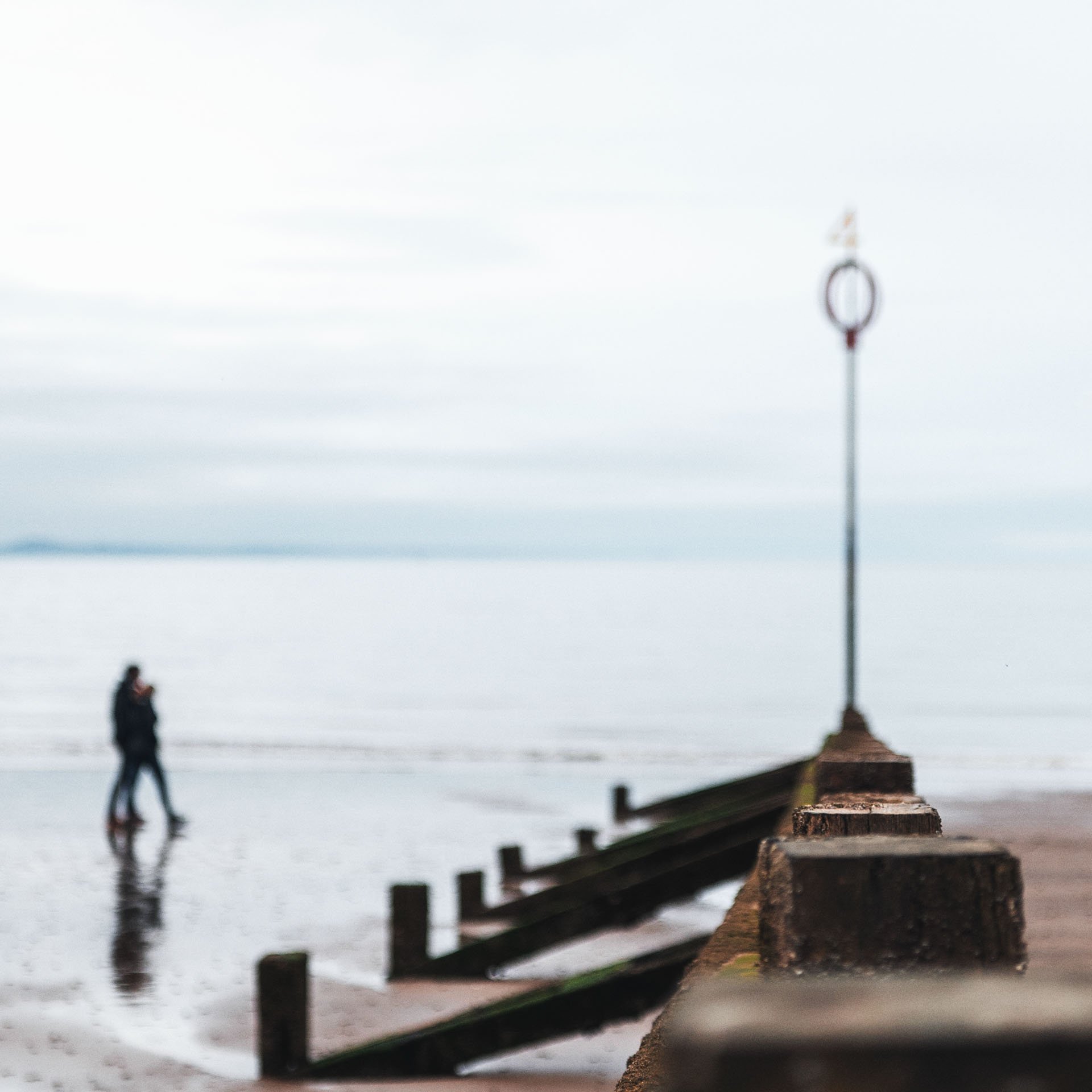
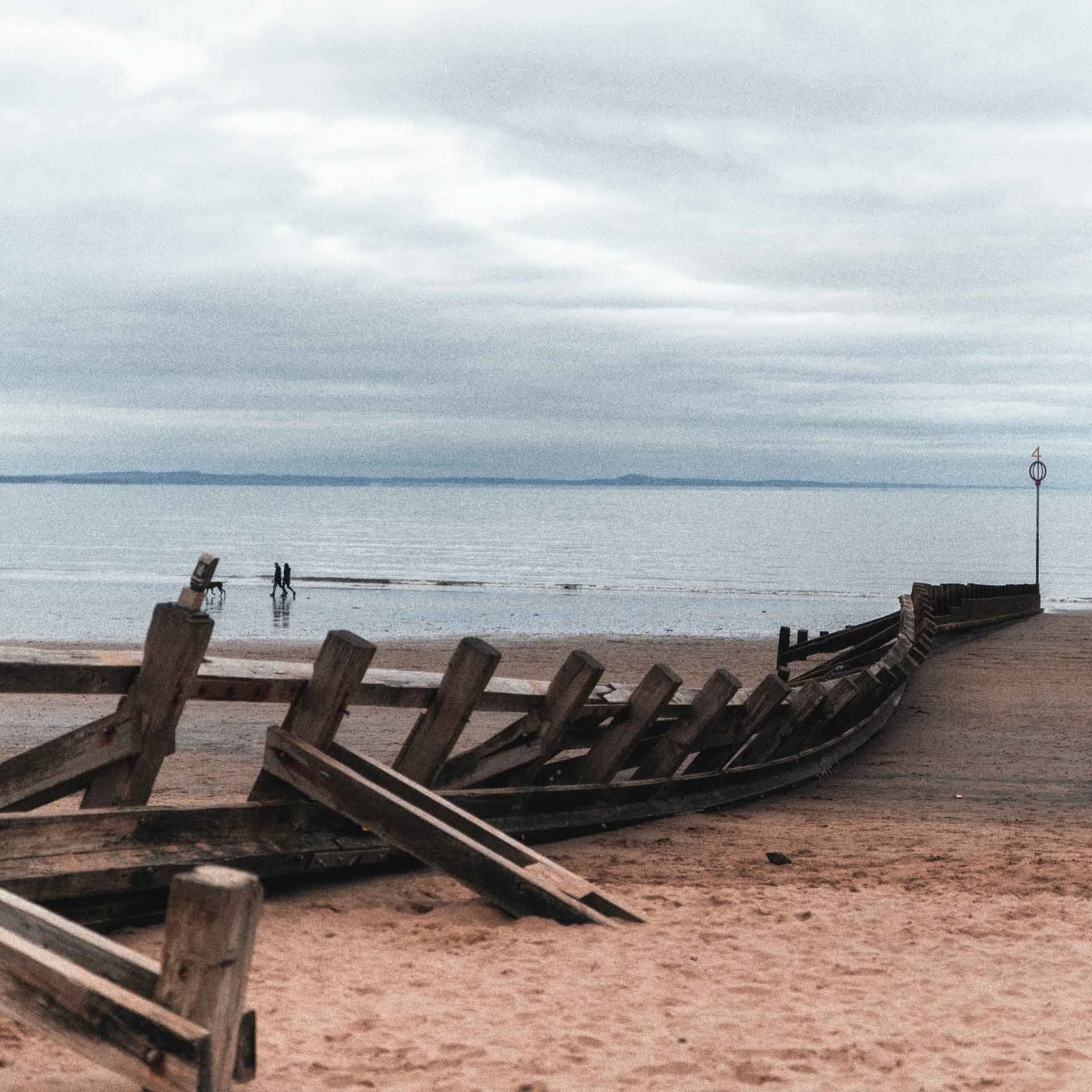
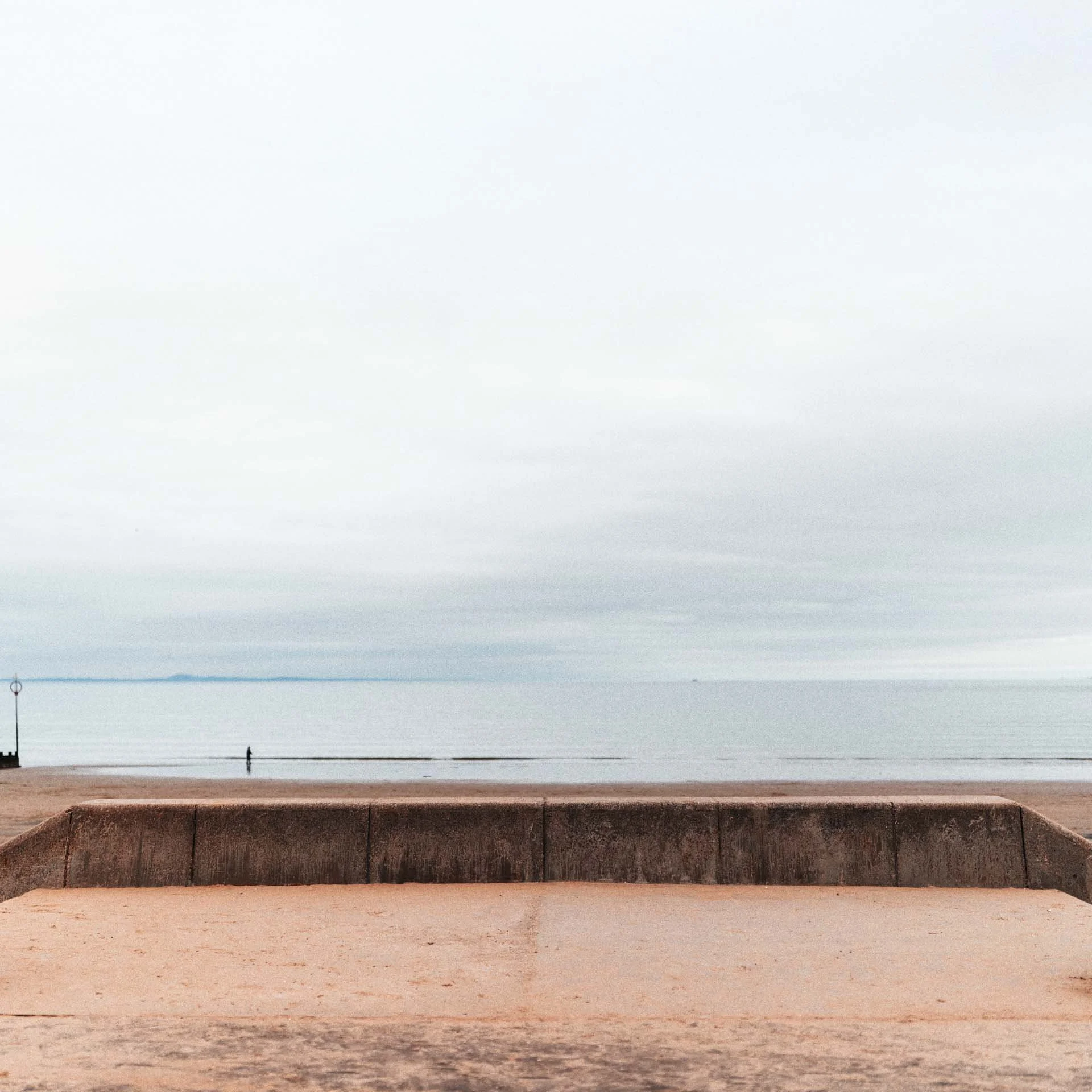
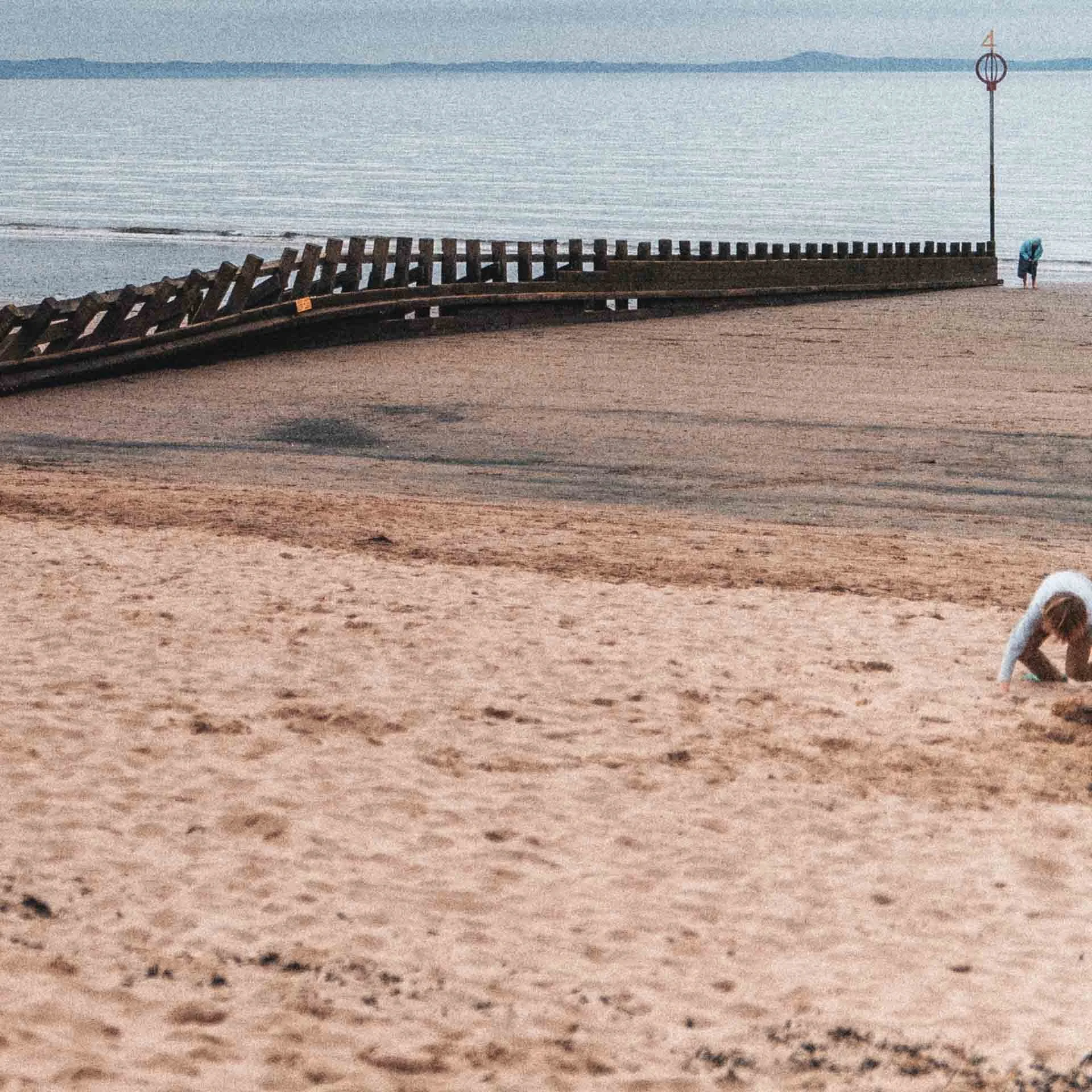
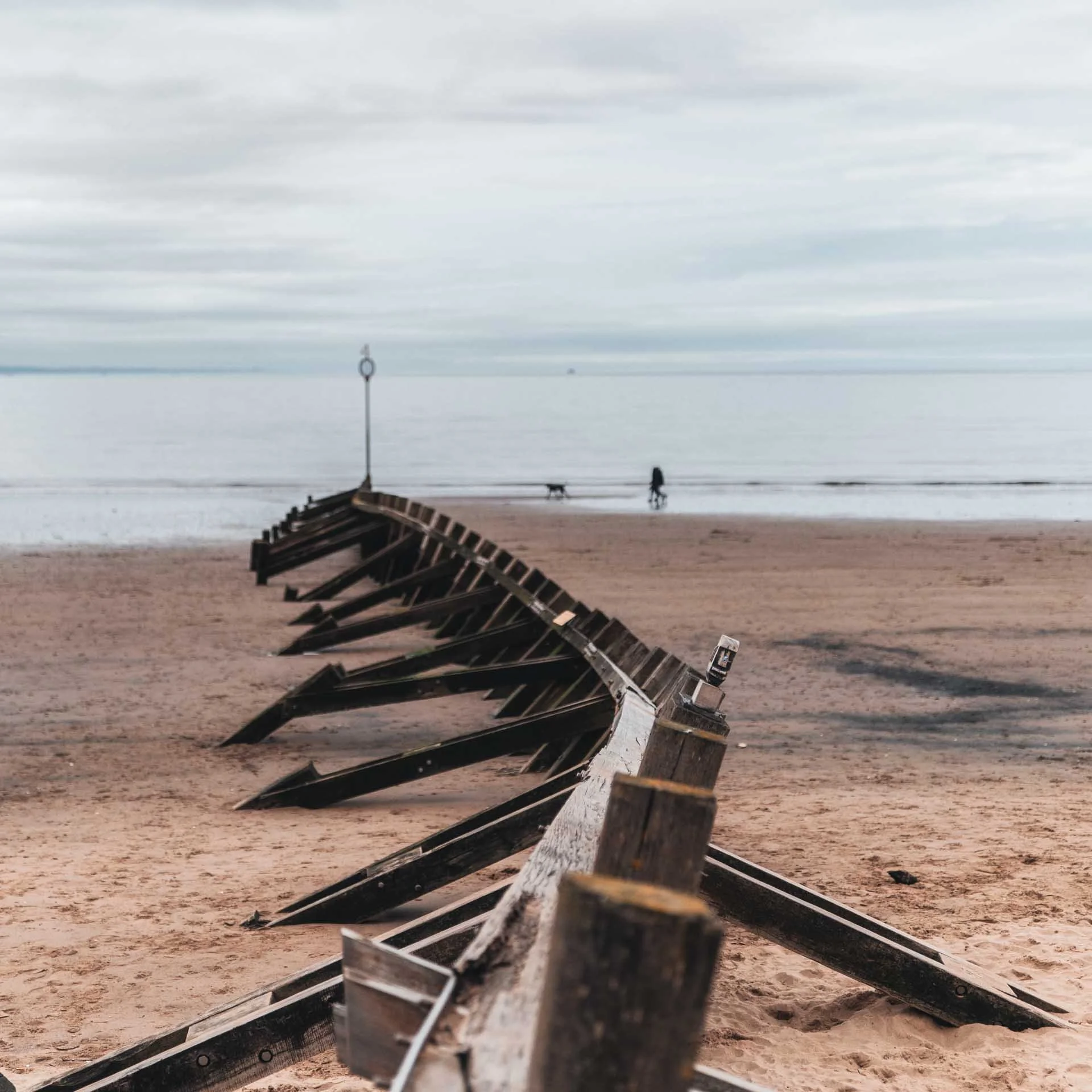
The beach was not empty, but it never felt busy. People moved through the open space at a distance: walking by the waterline, standing near the groynes, passing through the frame without becoming the main subject.
That distance is the point of the series.
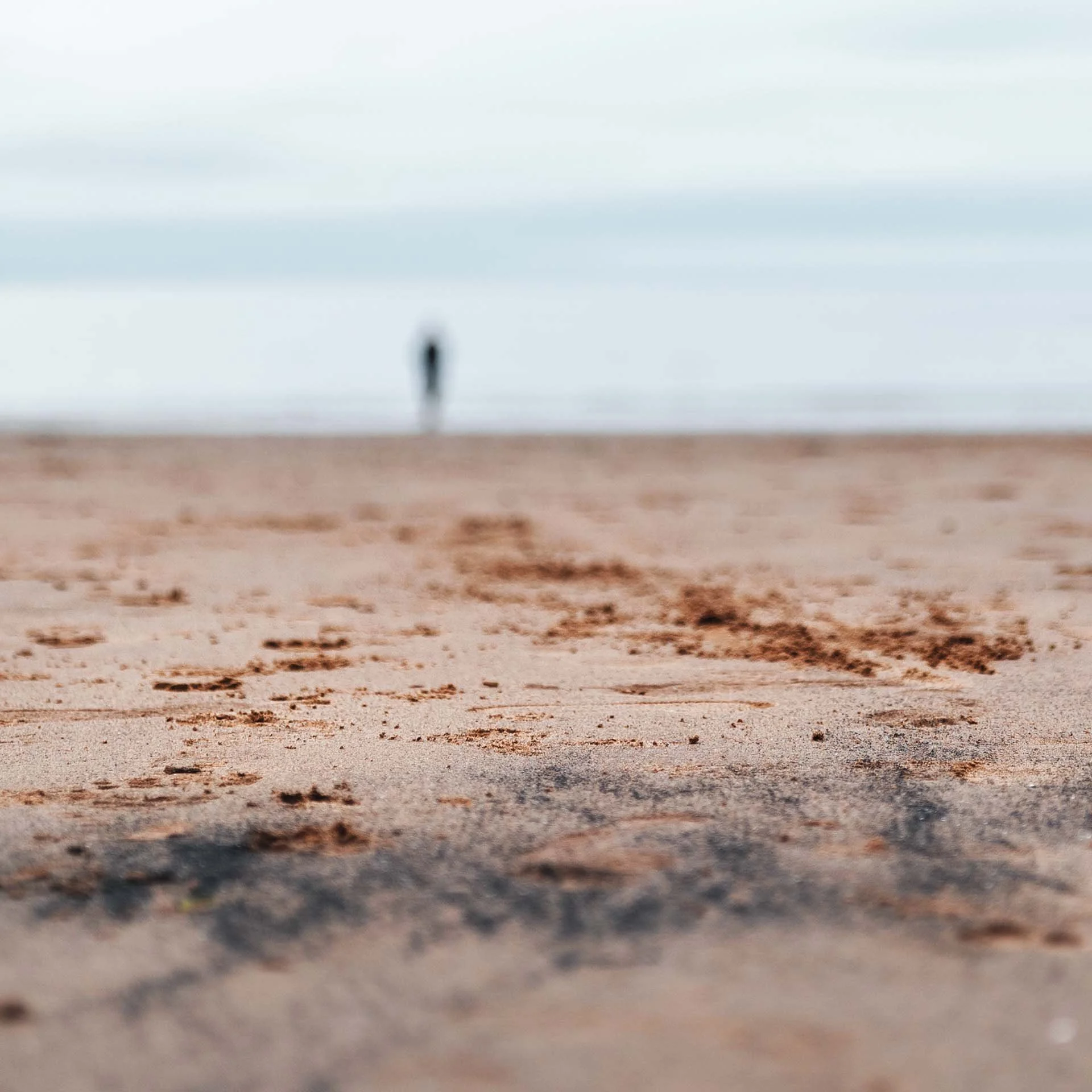
The figures are not treated as portraits. They are too small, too soft, or too far away for that. What interests me is what their presence does to the space around them. A single person can make the beach feel wider. A blurred figure can make the horizon feel further away. A small dark shape against pale water can hold together a frame that would otherwise become only sand, sky and sea.
Why distant figures matter
A completely empty beach can become too clean in a photograph. Sometimes that emptiness works, but it can also make the image feel like an arrangement of surfaces rather than a place being used.
The human figure changes that. It interrupts the space without taking it over. It gives the eye somewhere to pause, then allows the rest of the frame to stay open.
In these images, I was not looking for direct interaction or recognisable faces. I was watching how people briefly entered the structure of the beach: a person near the timber line, someone walking close to the water, a figure softened by distance and weather.
Between street and coastal photography
This series sits somewhere between street photography and coastal photography.
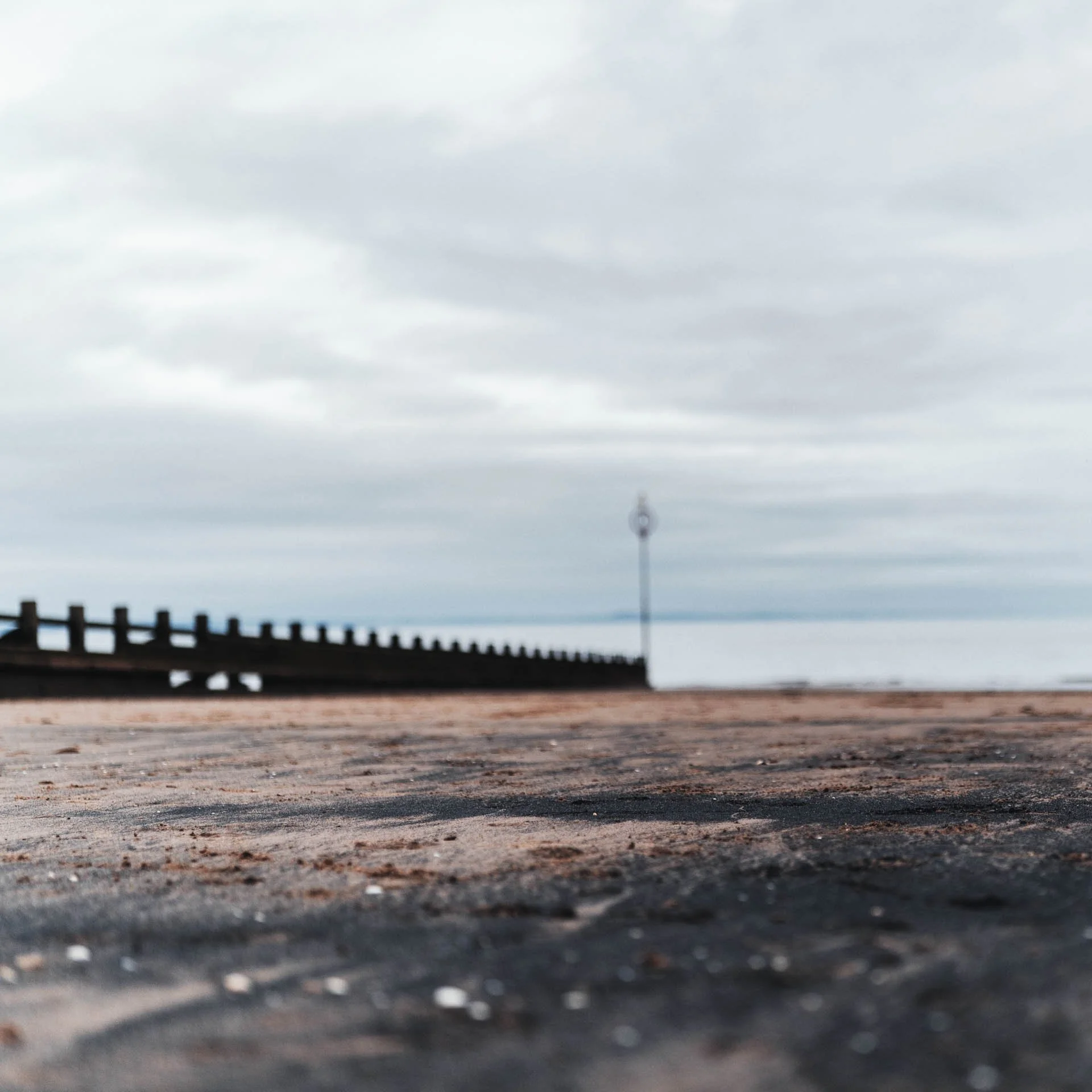
The street element comes from observation: waiting for small gestures, watching how people move through public space, reacting when a figure enters the frame. The coastal element comes from the openness of Portobello itself: the pale water, the sand, the horizon, the wooden structures and the flatness of the light.
The gestures are quieter than they would be in the city, but they still matter. A person walking by the sea can carry timing in the same way as someone crossing a street. The action is smaller, but the photograph still depends on it.
The square frame
The square format helps contain the distance. A wider crop would make the beach feel more scenic and descriptive. The square frame keeps the image restrained. It forces the figure, waterline, timber, sand and sky to share the same space.
This matters because the photographs are not about showing the whole beach. They are about holding a small human presence inside a larger coastal space.
Not empty, not crowded
What I remember from that day is the balance. Portobello felt open, but not empty. Calm, but not still. Familiar, but slightly unsettled.
The people in the photographs pass through without claiming the scene. That restraint is what makes them useful to the images. They give scale, but they do not explain too much. They remain distant enough to become part of the structure of the place.
Not portrait. Not pure landscape.
A beach made visible by figures almost disappearing inside it.