Midnight Tram
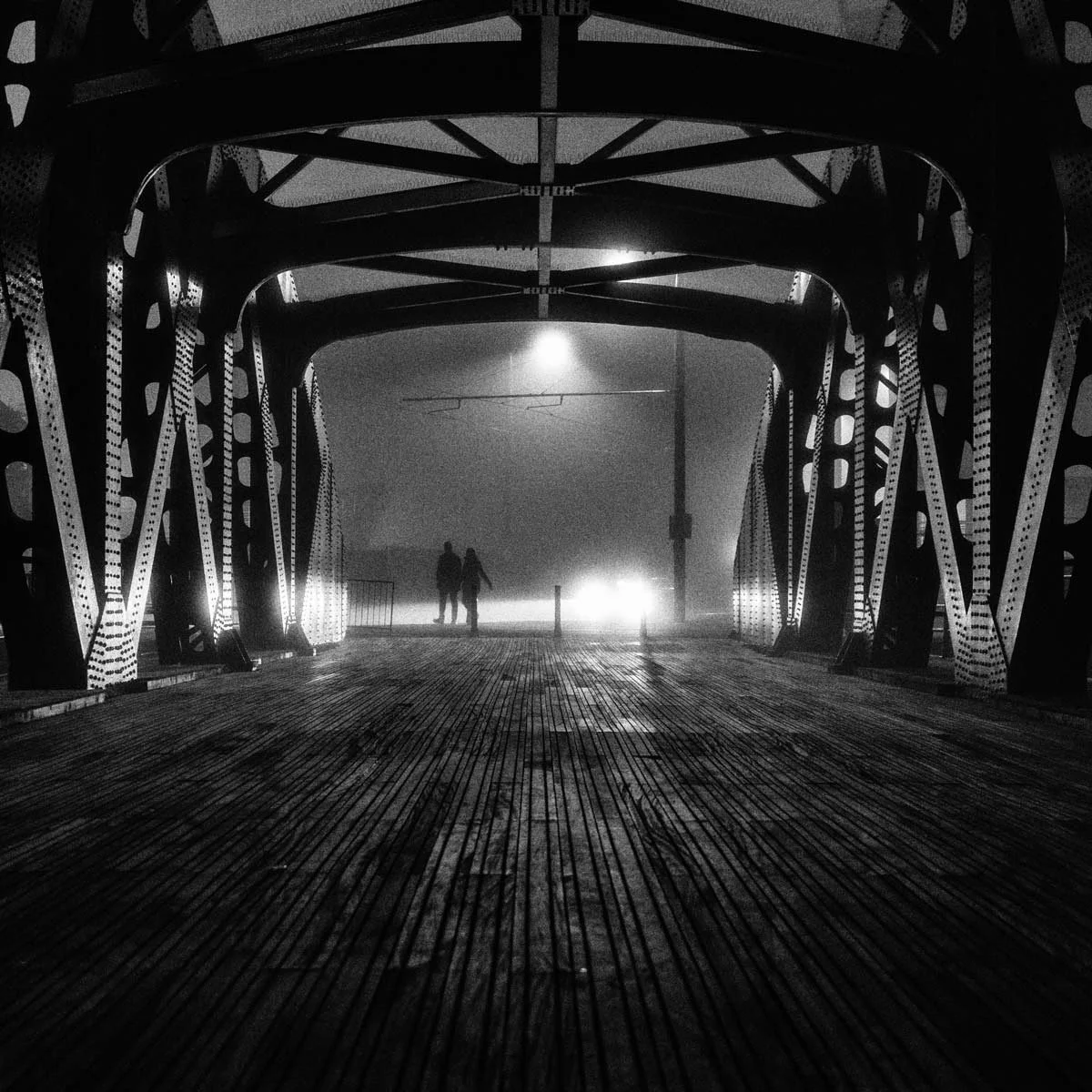
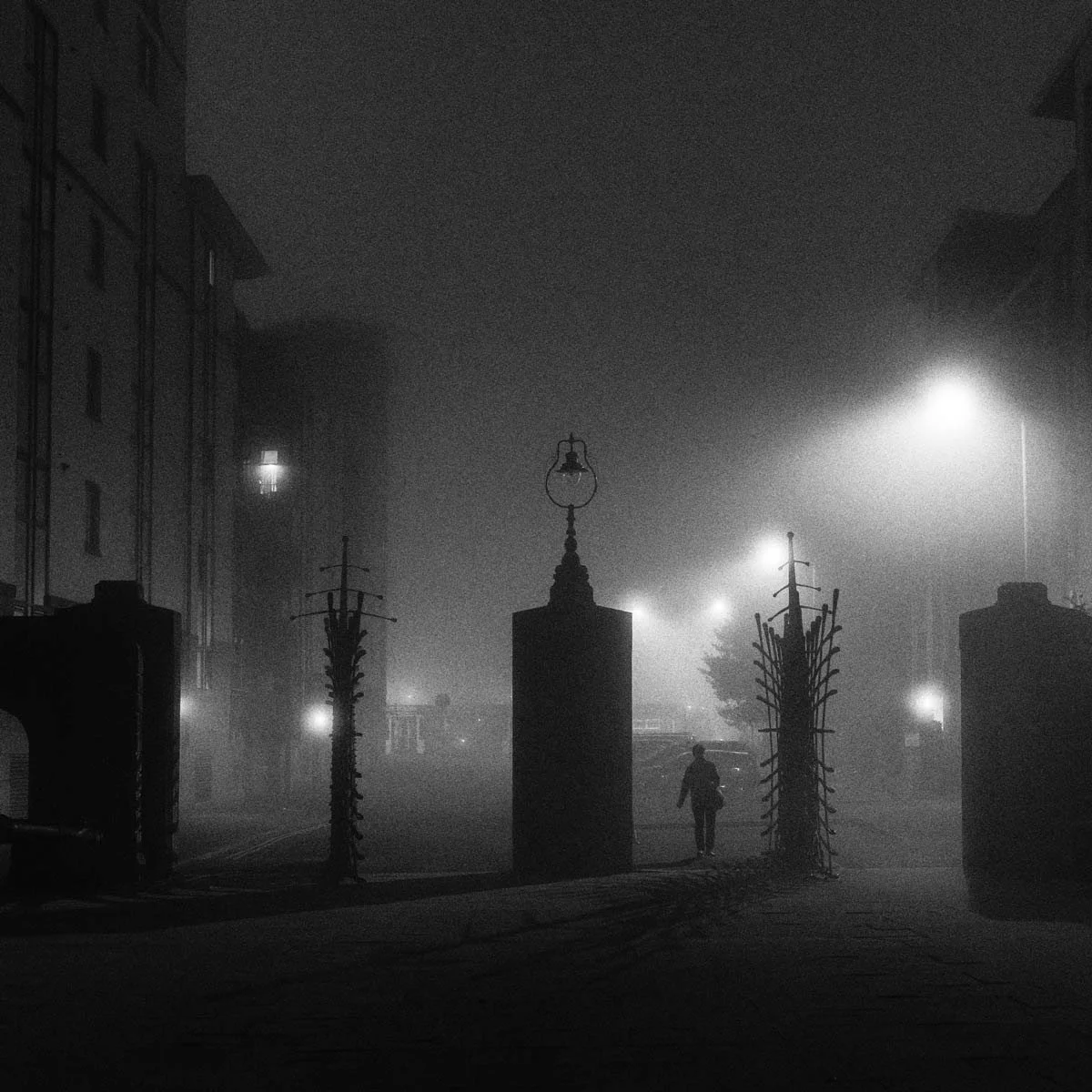
Midnight Tram was made in Edinburgh’s docklands. The Shore, beside the Port of Leith. Most of it sits around Lower Drawbridge. It’s a pedestrian bridge. It was closed for years. You stopped thinking about it because you couldn’t use it.
I knew the work was finished. I was waiting for light. Not pretty light. Just the kind that holds a frame together. Street lamps. Wet ground. Hard edges.
One September night, close to midnight, I saw Haar through the window. Sea fog. It comes in fast. It flattens distance. It wipes the background clean. I thought of Lower Drawbridge and went to check. The bridge was open.
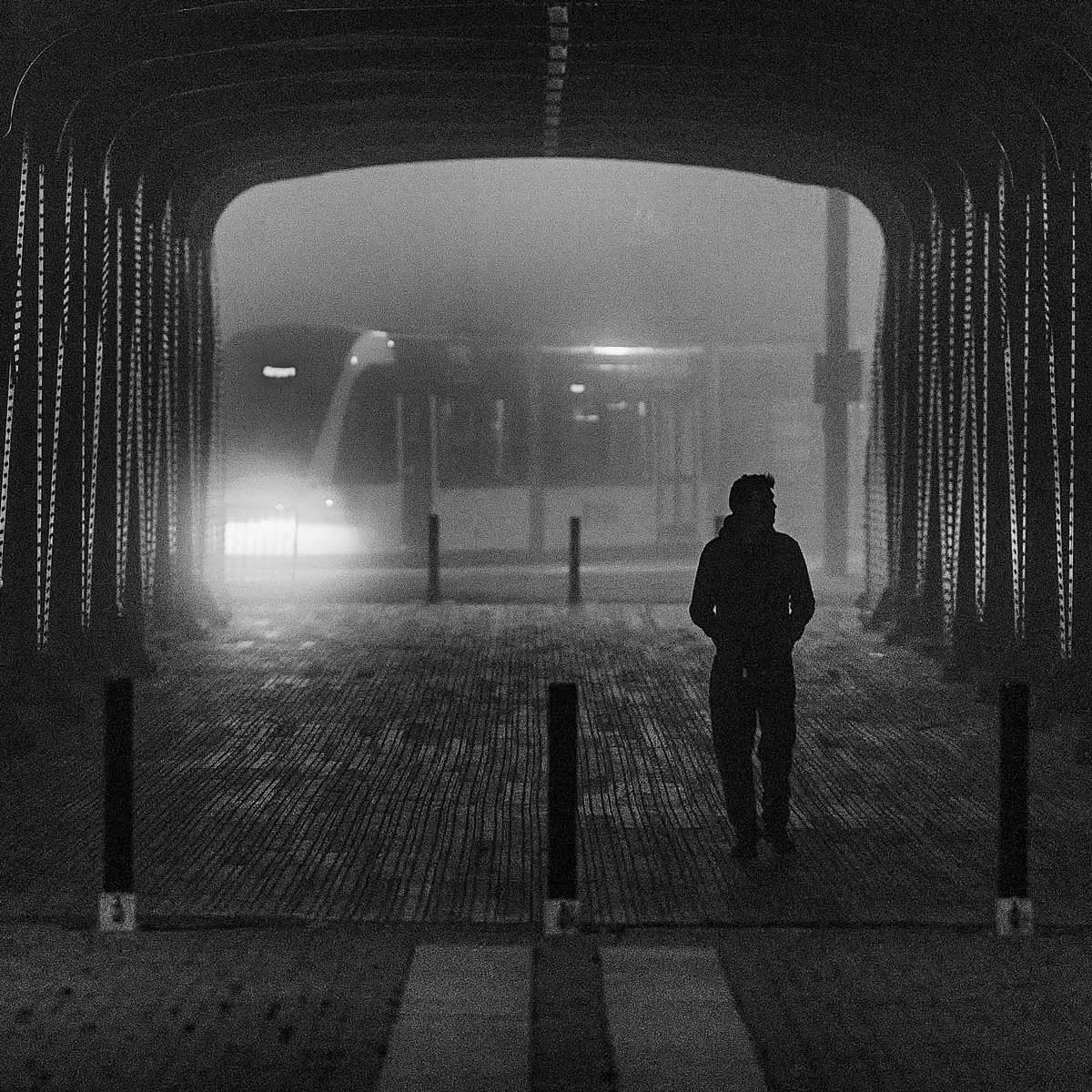
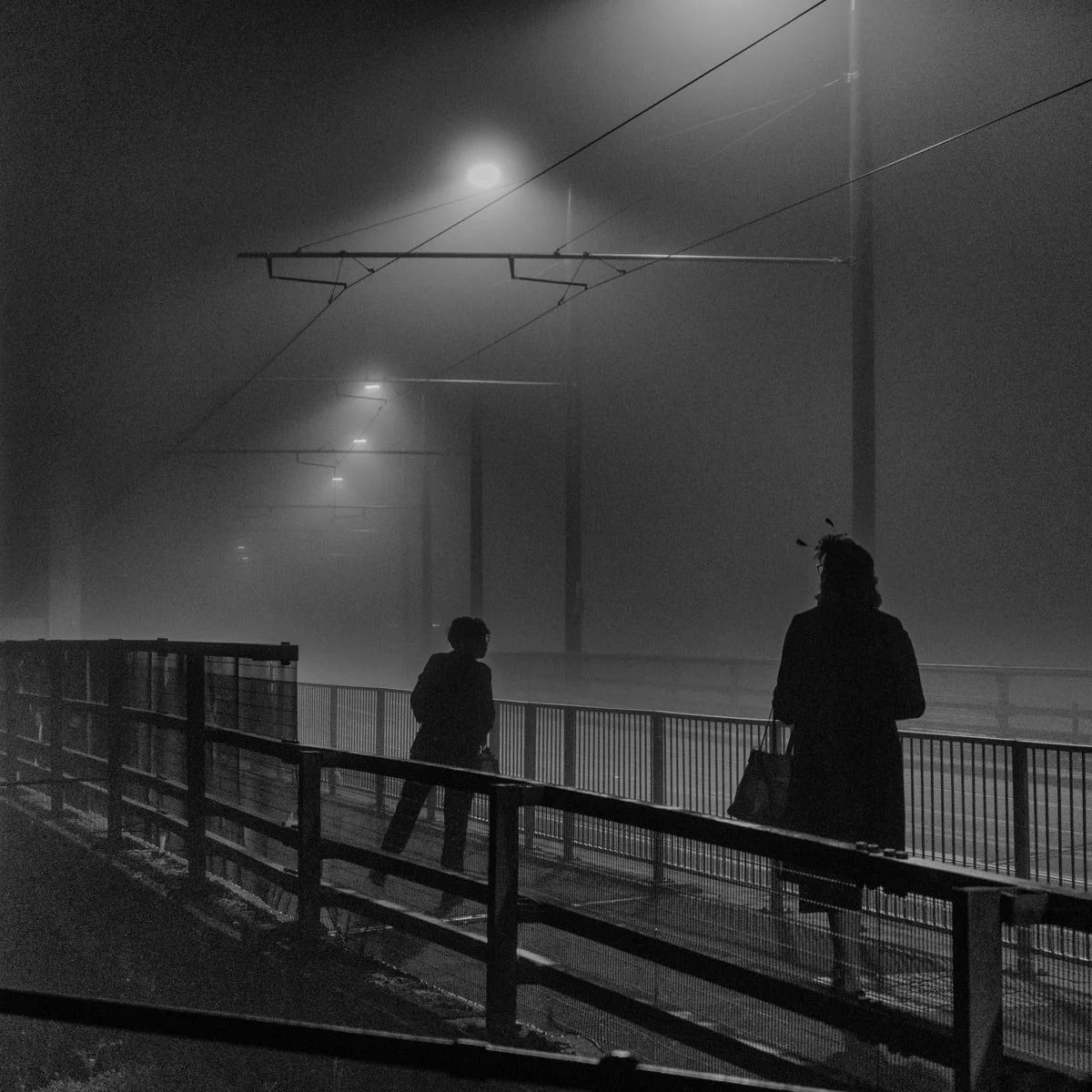
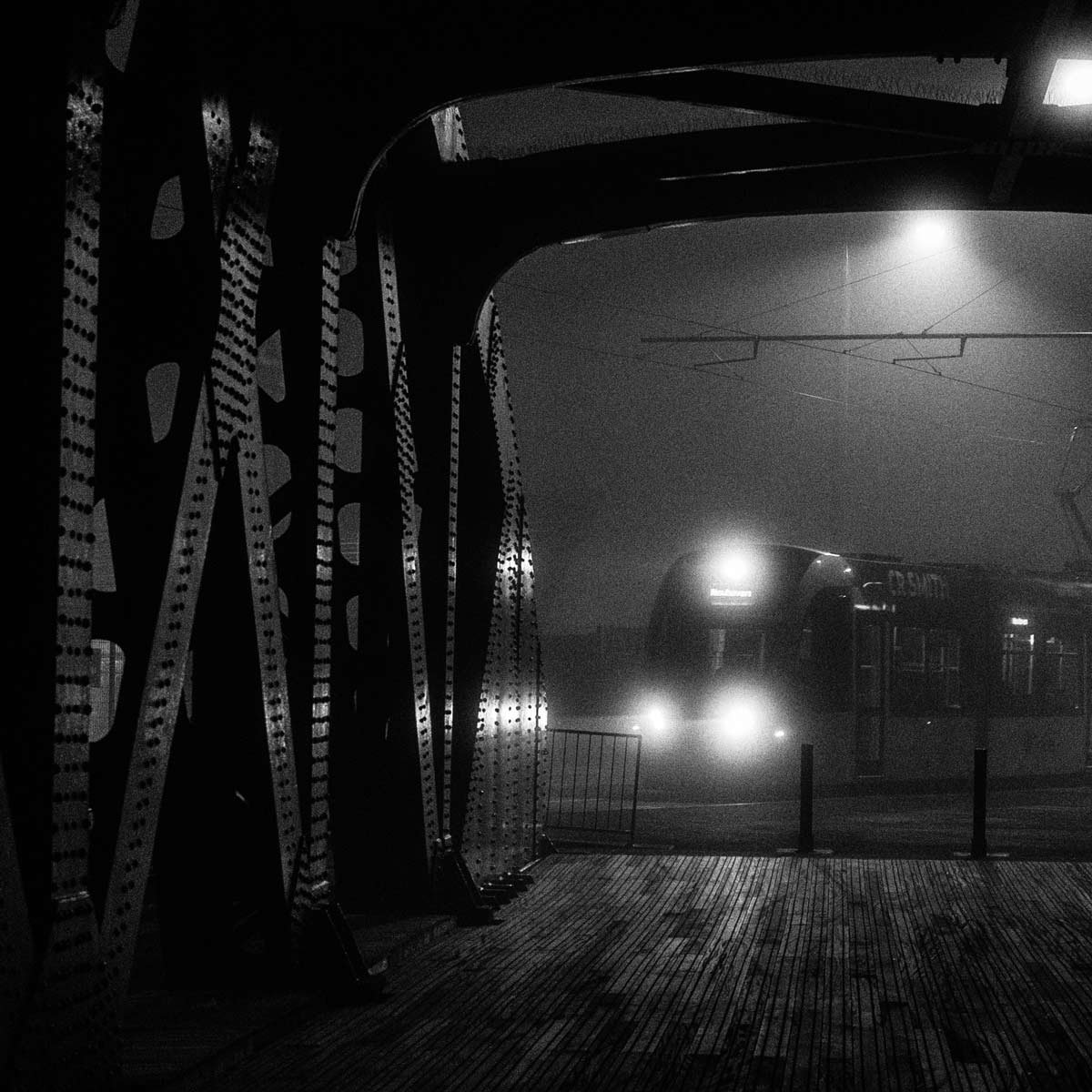
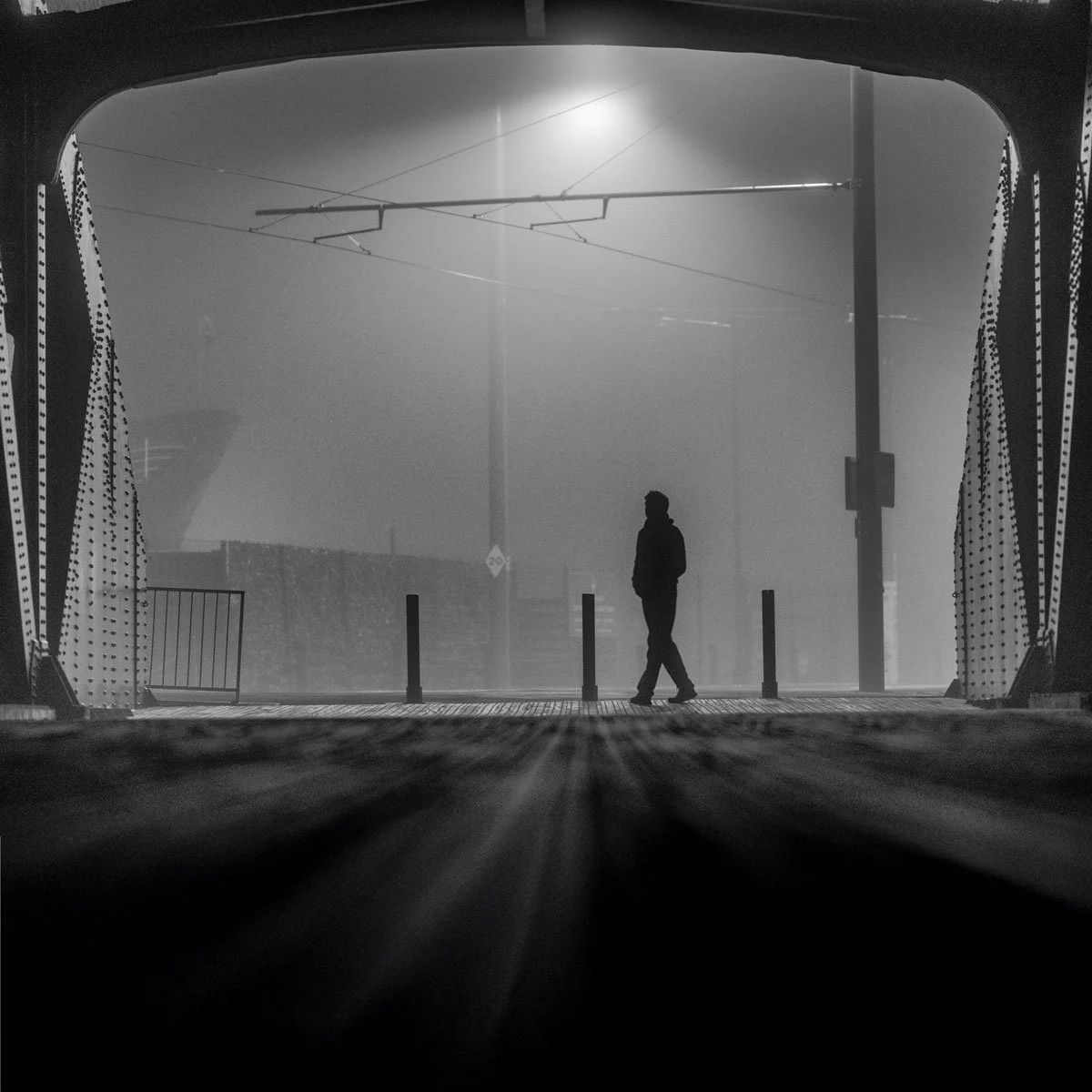
Down there, the city was stripped to basics. Lamp glare. Timber underfoot. Steel overhead. Tram wires fading into nothing. The bridge felt like a corridor. The fog did the rest.
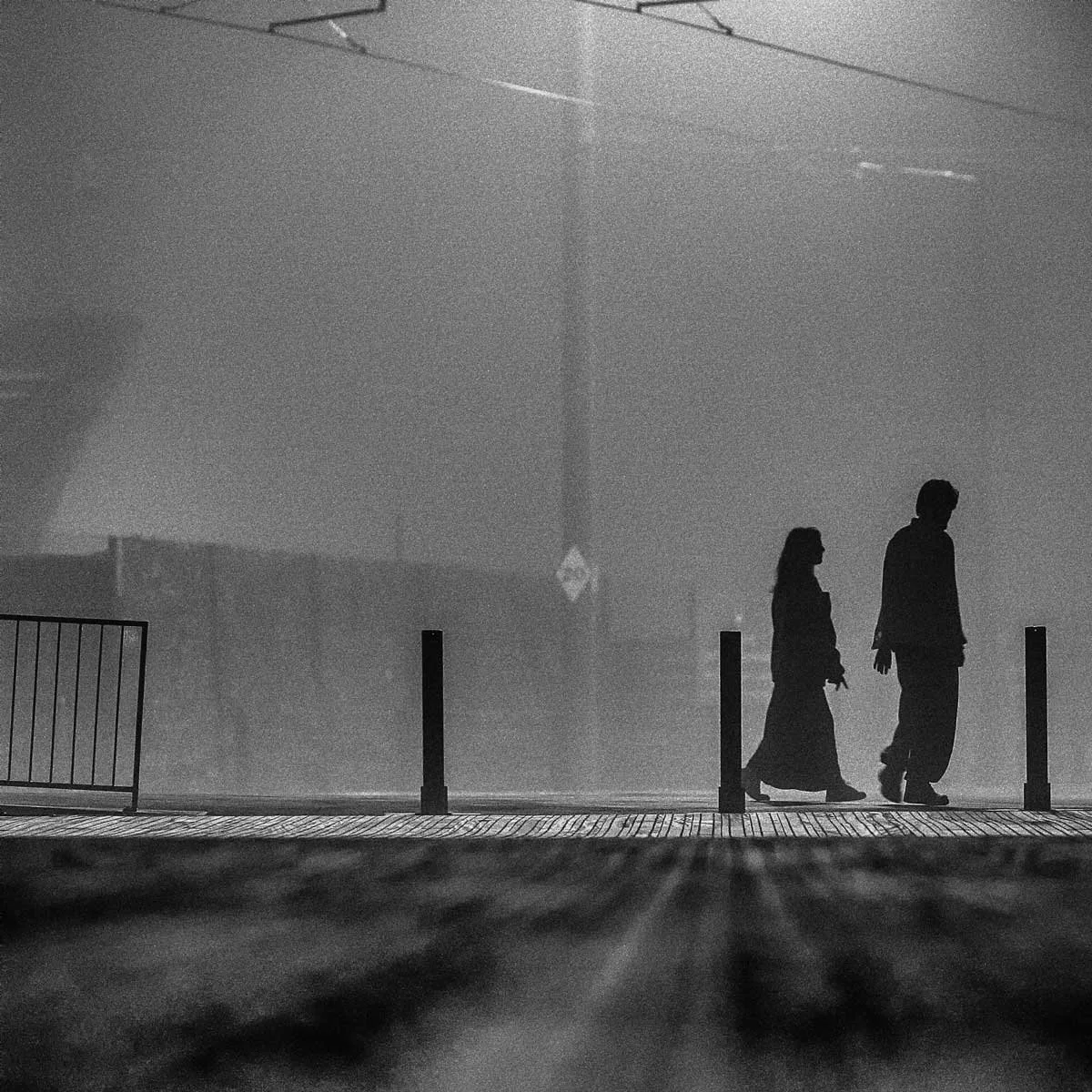
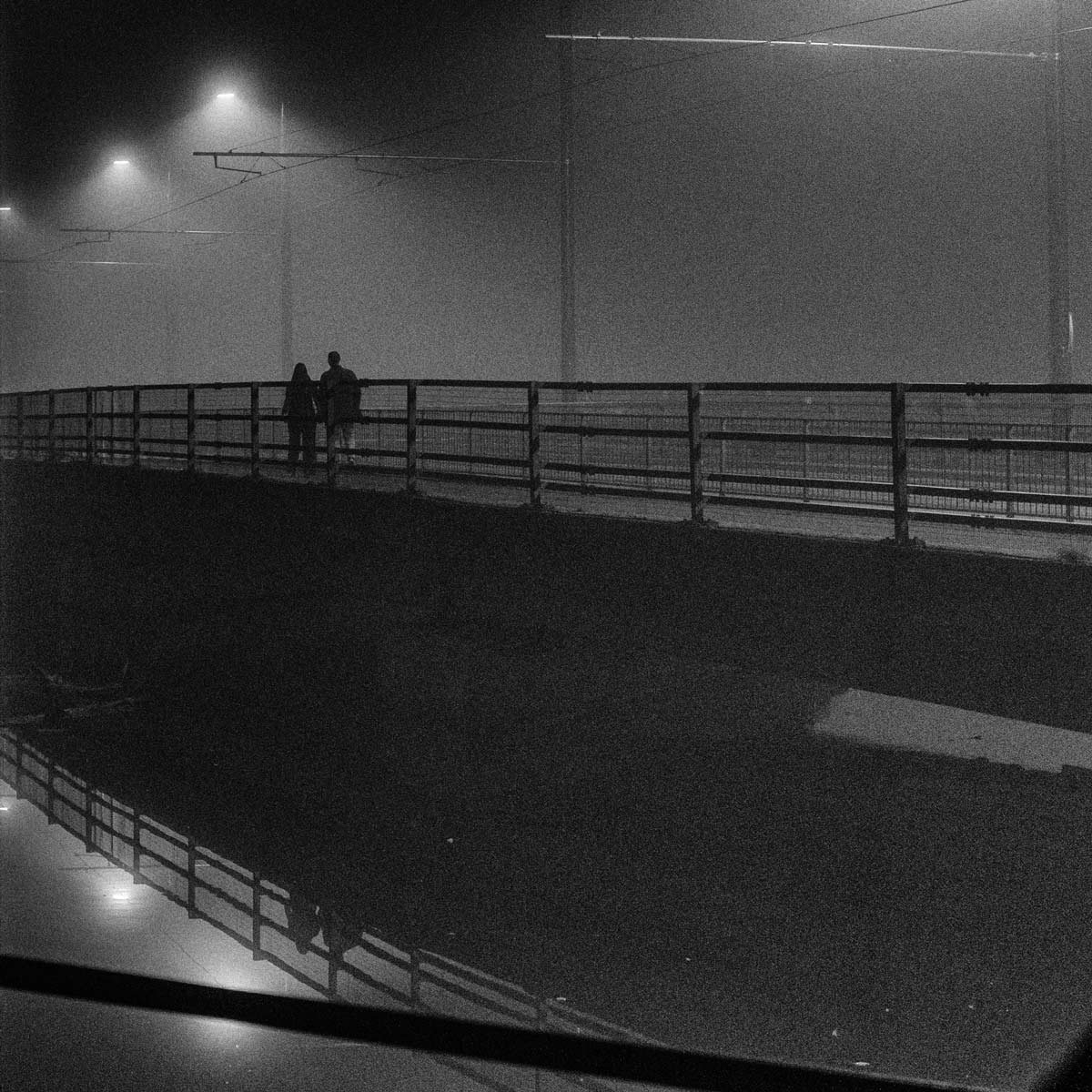
The tram arrived and vanished. It looked unreal in Haar. Headlights turned into a glow. Then a line. Then nothing. People became silhouettes. They were there for a second. Then they were gone.
This series is about silence cutting through the city. Not emptiness. Just a moment when the noise drops away. You see structure. Lines. Spacing. Repetition. Light that can’t escape.
Haar doesn’t add atmosphere. It removes it. It leaves what matters. The bridge. The wires. The lamps. The tram moving through a city that suddenly feels still.