
HAAR
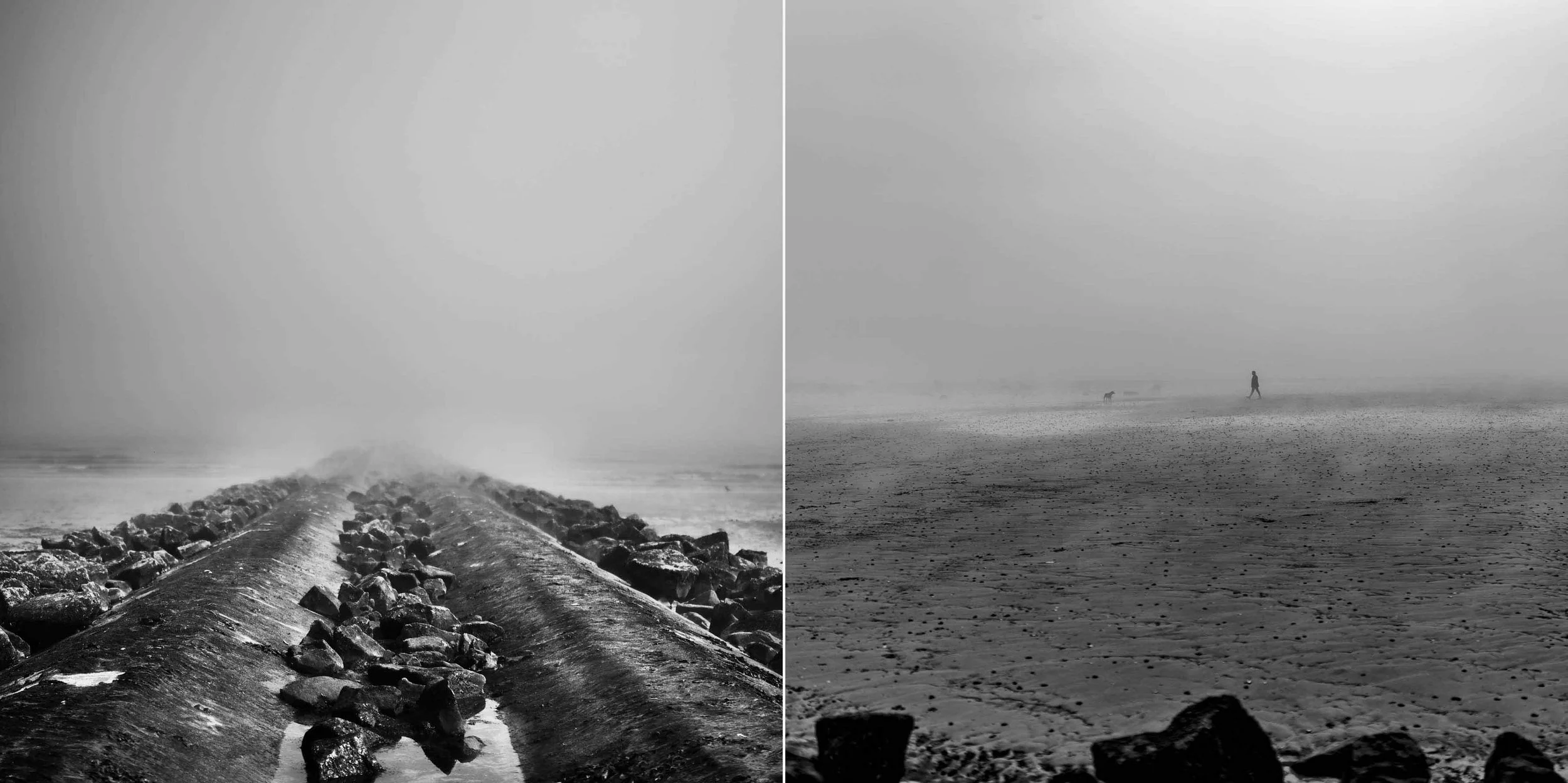
Haar : A cold, creeping fog. It moves through the ocean with a silent pace. The fog envelops everything from the shore to the streets to the people. The Scottish east coast experiences this phenomenon frequently. It softens the world. Makes everything quiet. Almost dreamlike.
Absence of shade
I love photographing Haar. It changes everything. Shapes blur. Light melts. Shadows disappear. The world looks different—almost like another time, another place. Seafield and Portobello are my to go spots. The Haar comes in thick there (mostly). The mist envelops the sand and moves between the rocks. People vanish into it, then reappear. Like ghosts.
Ghost
A photograph shows a man leading his dog through the mist. Or rather, shapes in the mist reveal themselves as barely discernible silhouettes. The dog leads the way while its body fades into the fog. It’s peaceful. Almost lonely. But there’s warmth in it too. A shared moment in the cold. Another image—crows in the foreground. The dark shapes of the birds remain distinct because they stand out against the surrounding mist. The sun struggles to penetrate through the Haar. Light pushes through, but the fog is stubborn. It doesn’t leave easily. A battle between elements. Between clarity and mystery.
Rowers
Then, there’s the rowers. Members of the local Portobello sailing club. A coastal rowing boat cuts through the motionless water. The rowers lean forward as they move their oars across water that appears almost invisible. No horizon, no sky. Just water and fog. A journey into nothingness. Black and white suits Haar. It strips away distractions. Leaves only light and shadow. Texture and mood. The weight of the air, the hush of the world. Haar is fleeting. Here one moment, gone the next. But in these images, it stays. A frozen whisper of mist and mystery. A moment that lingers, even after the fog has lifted.


