Candlemaker Light
Light as Structure
Late afternoon in Edinburgh does most of the editing for you.
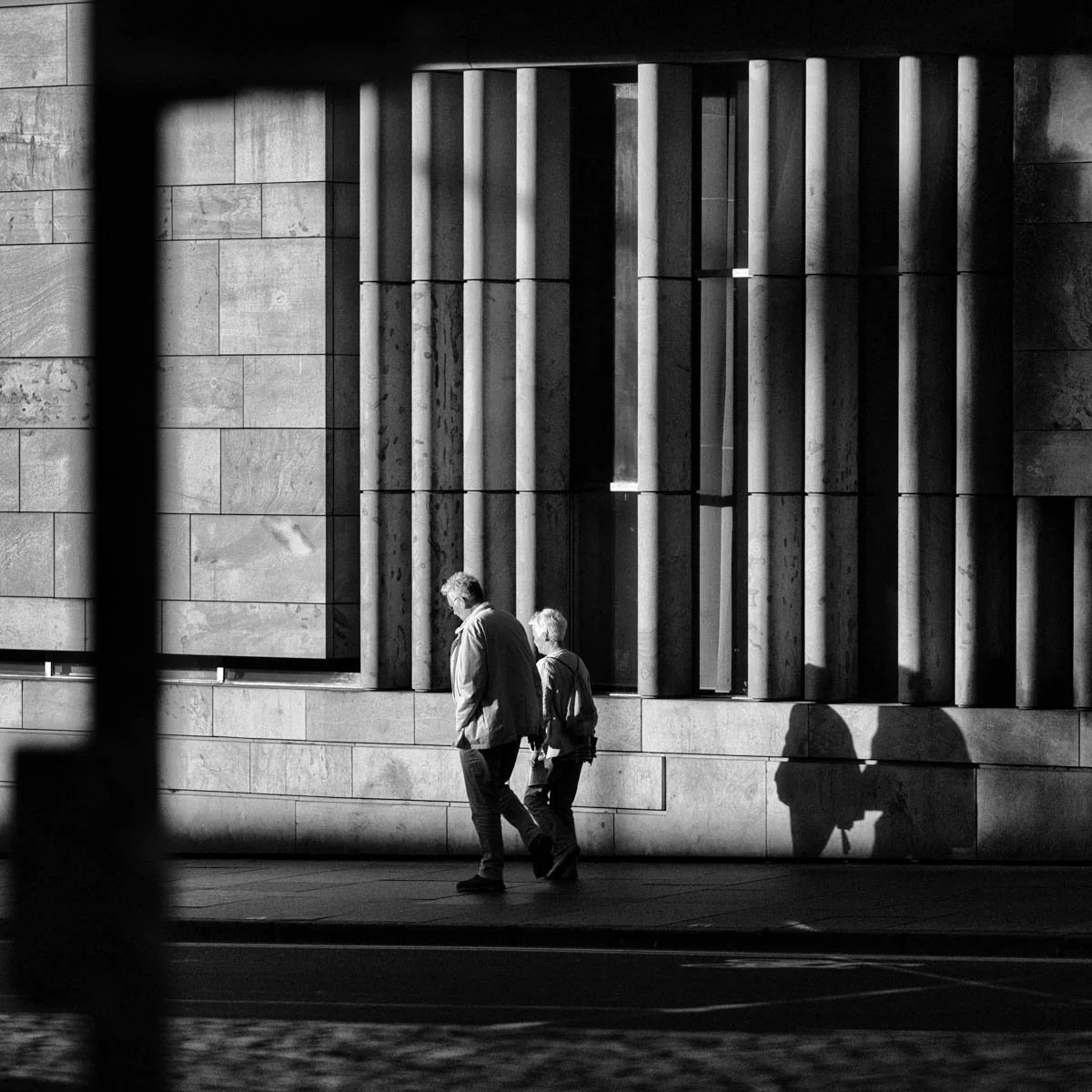
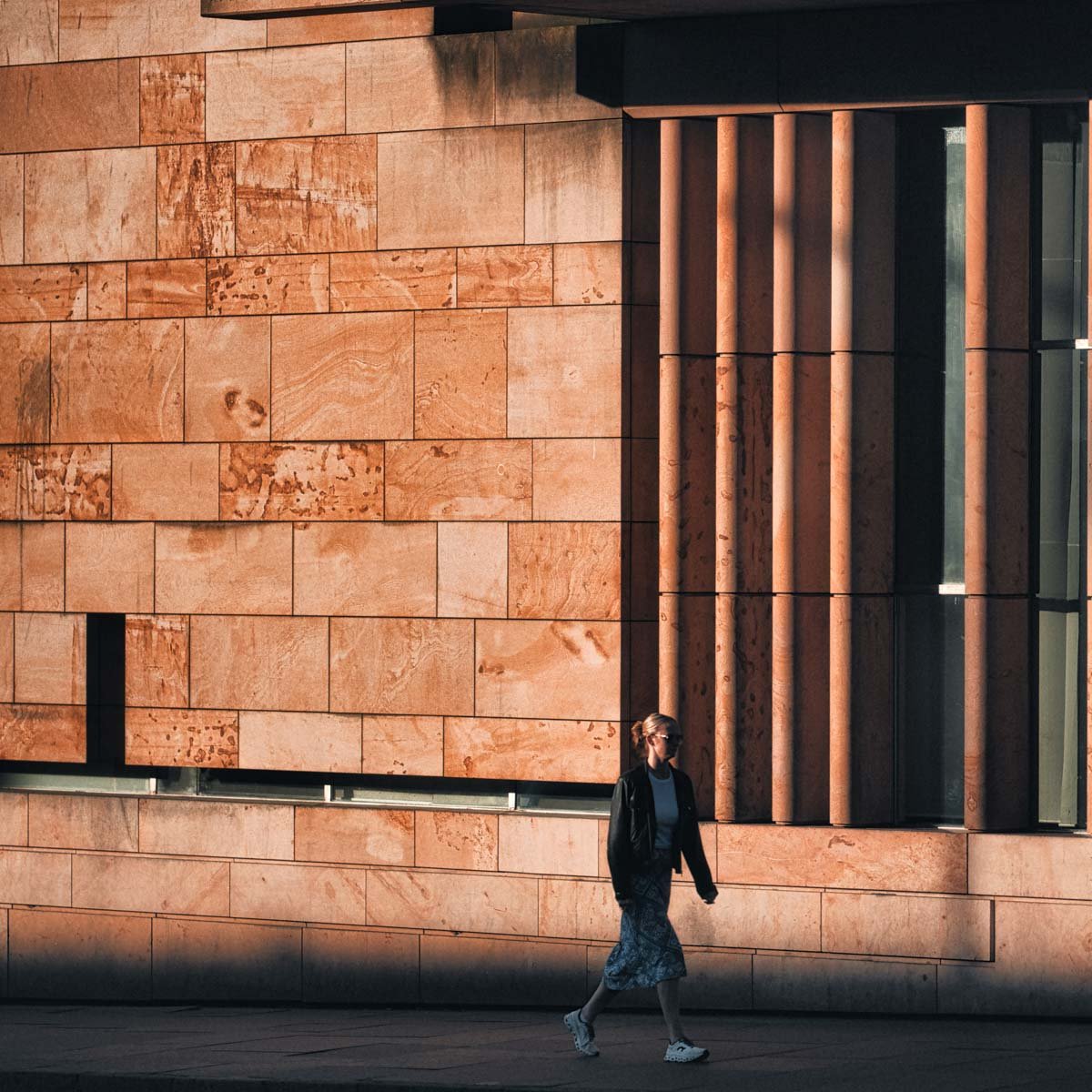
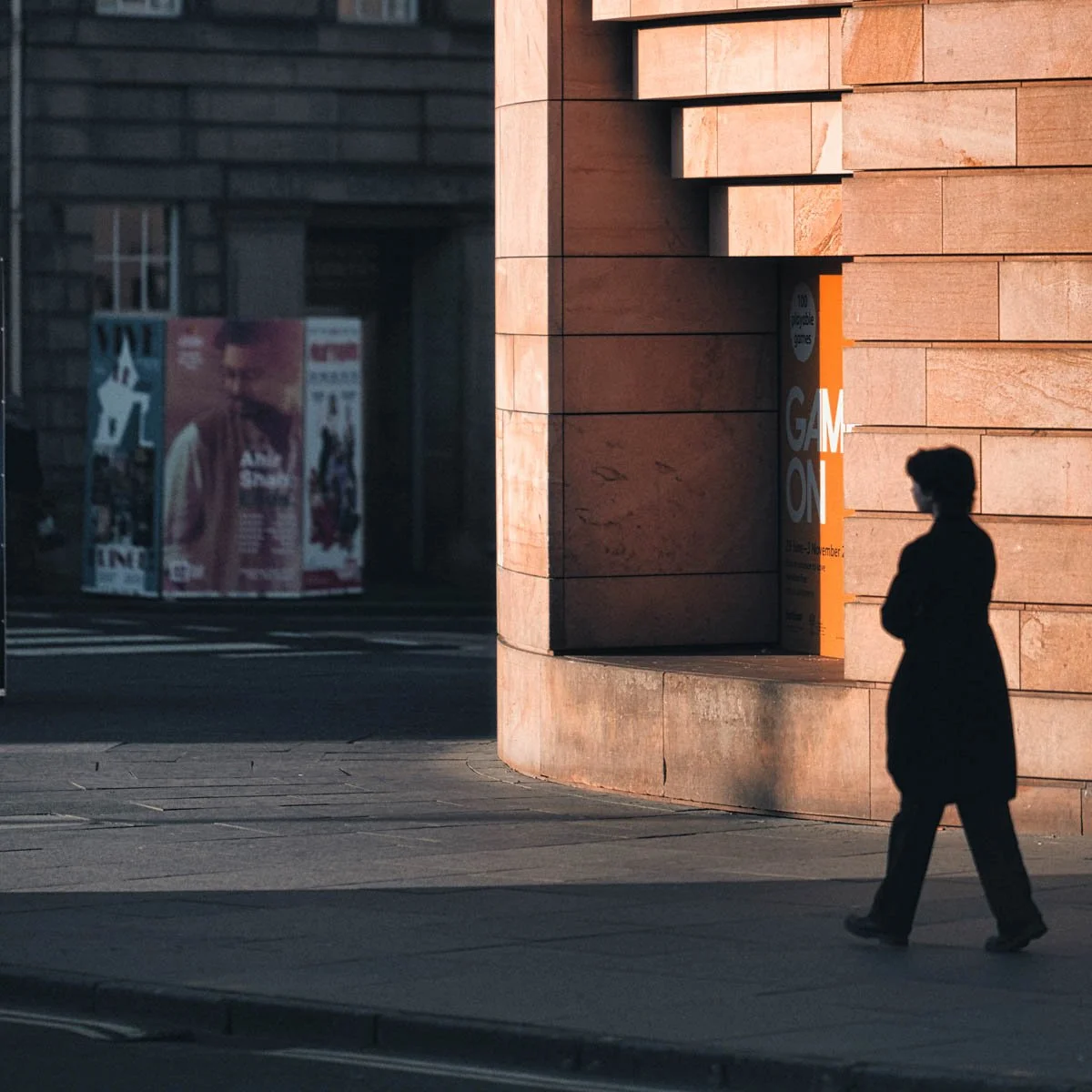
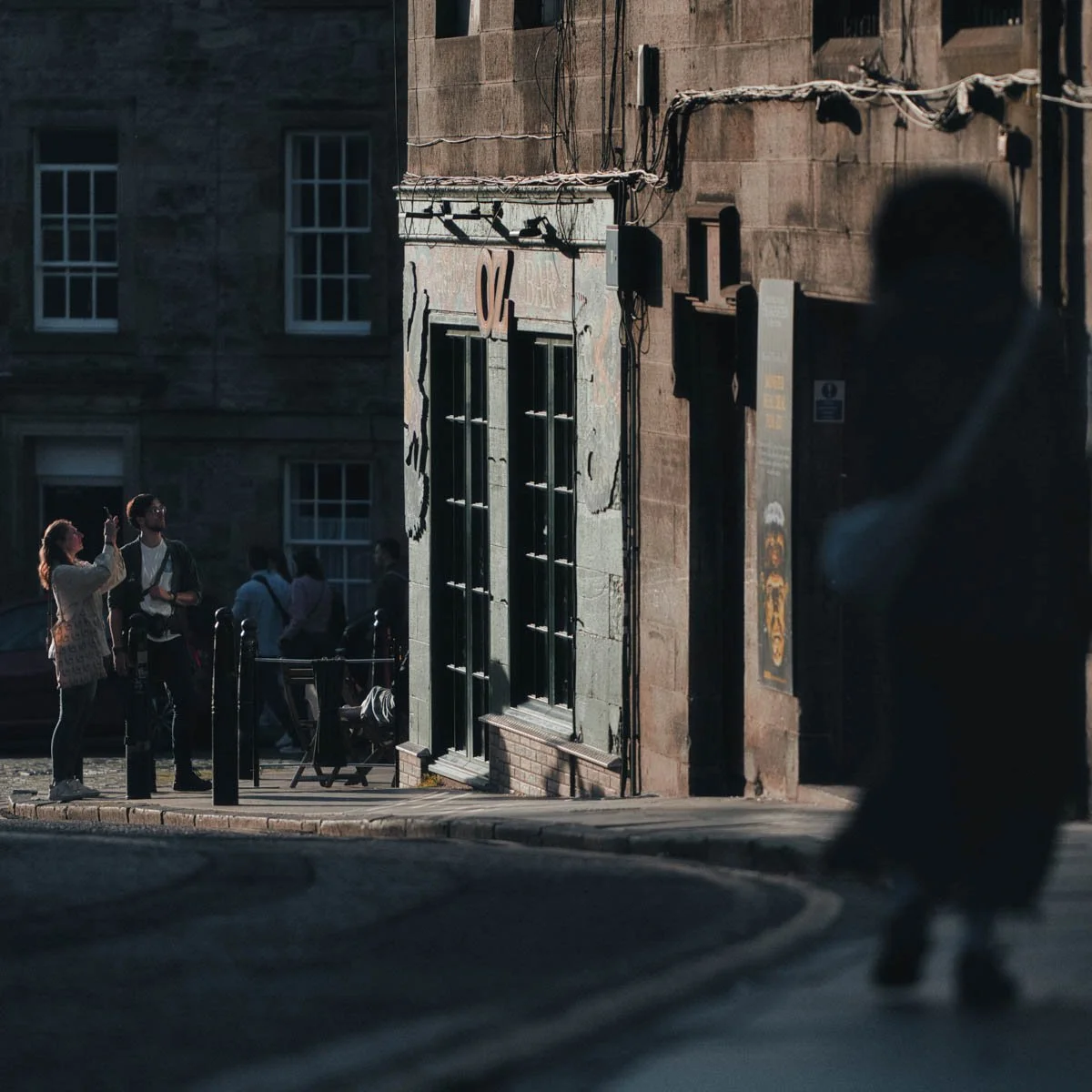
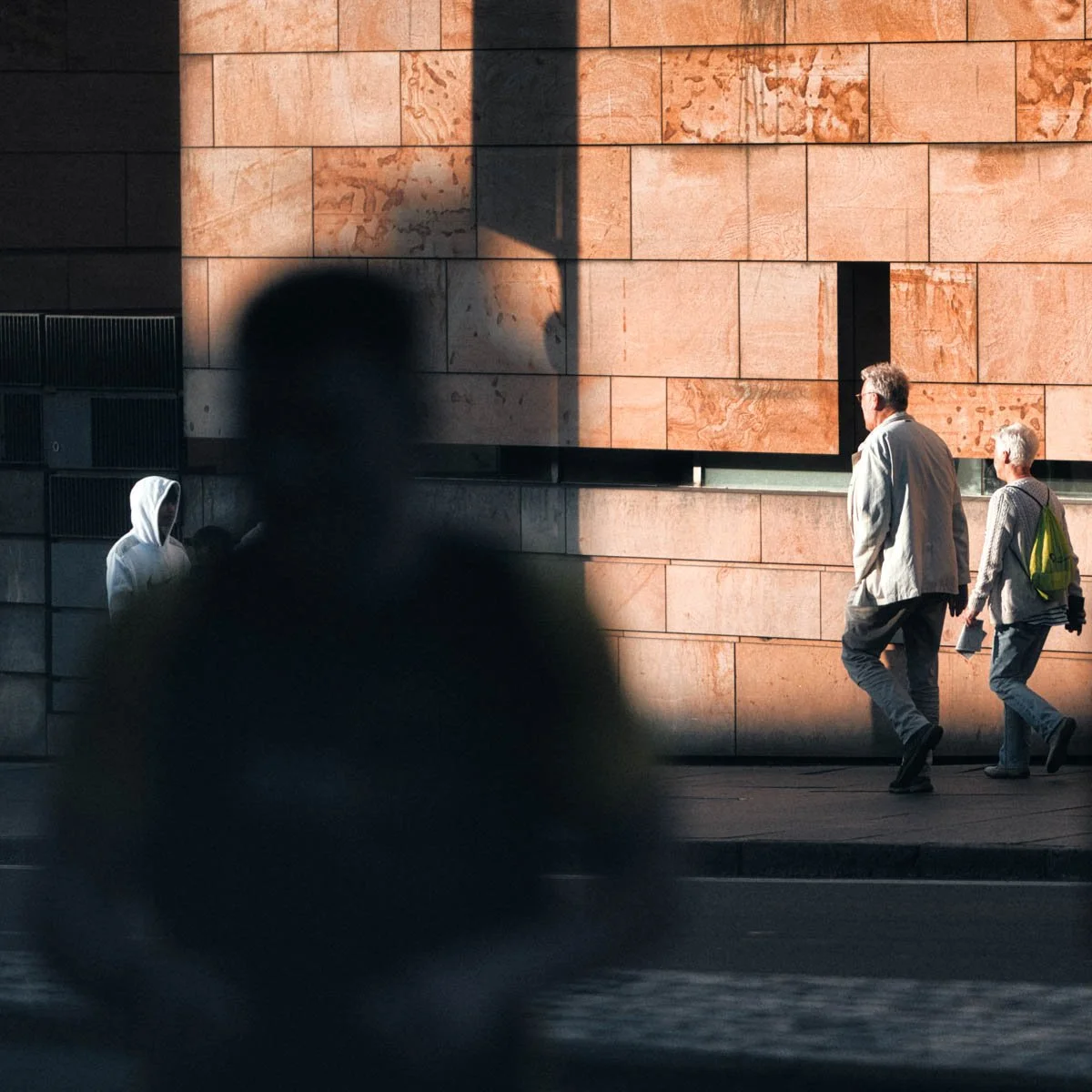
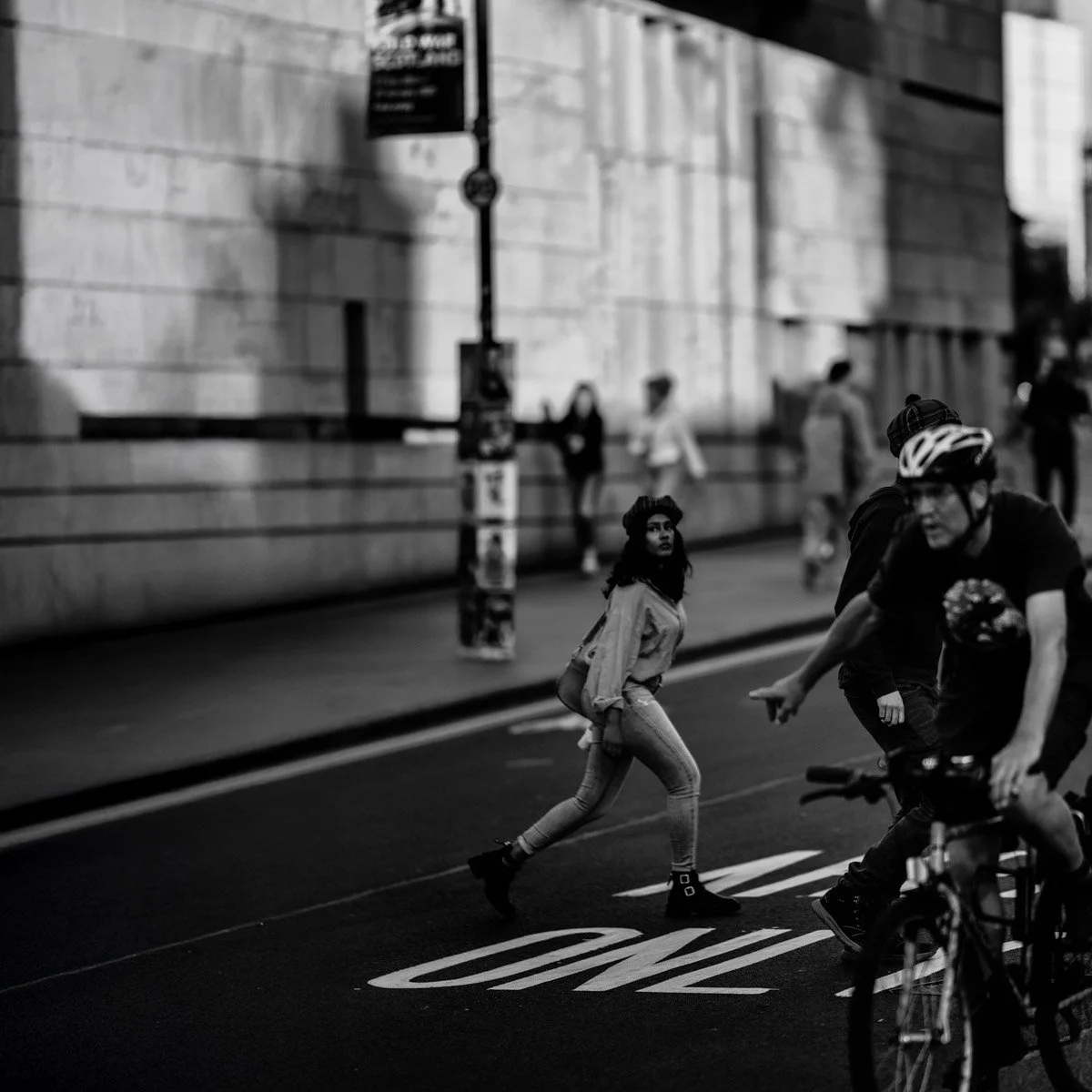
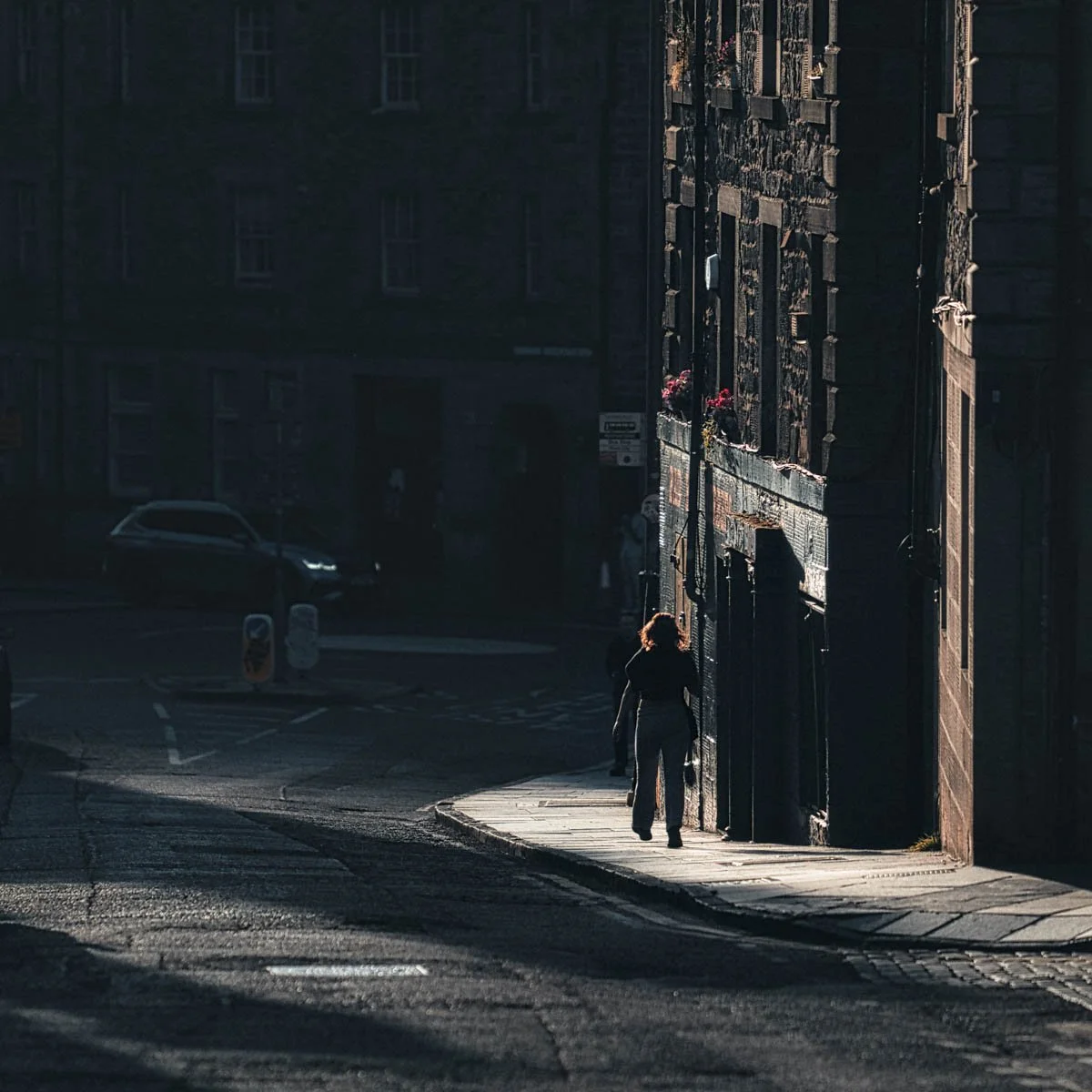
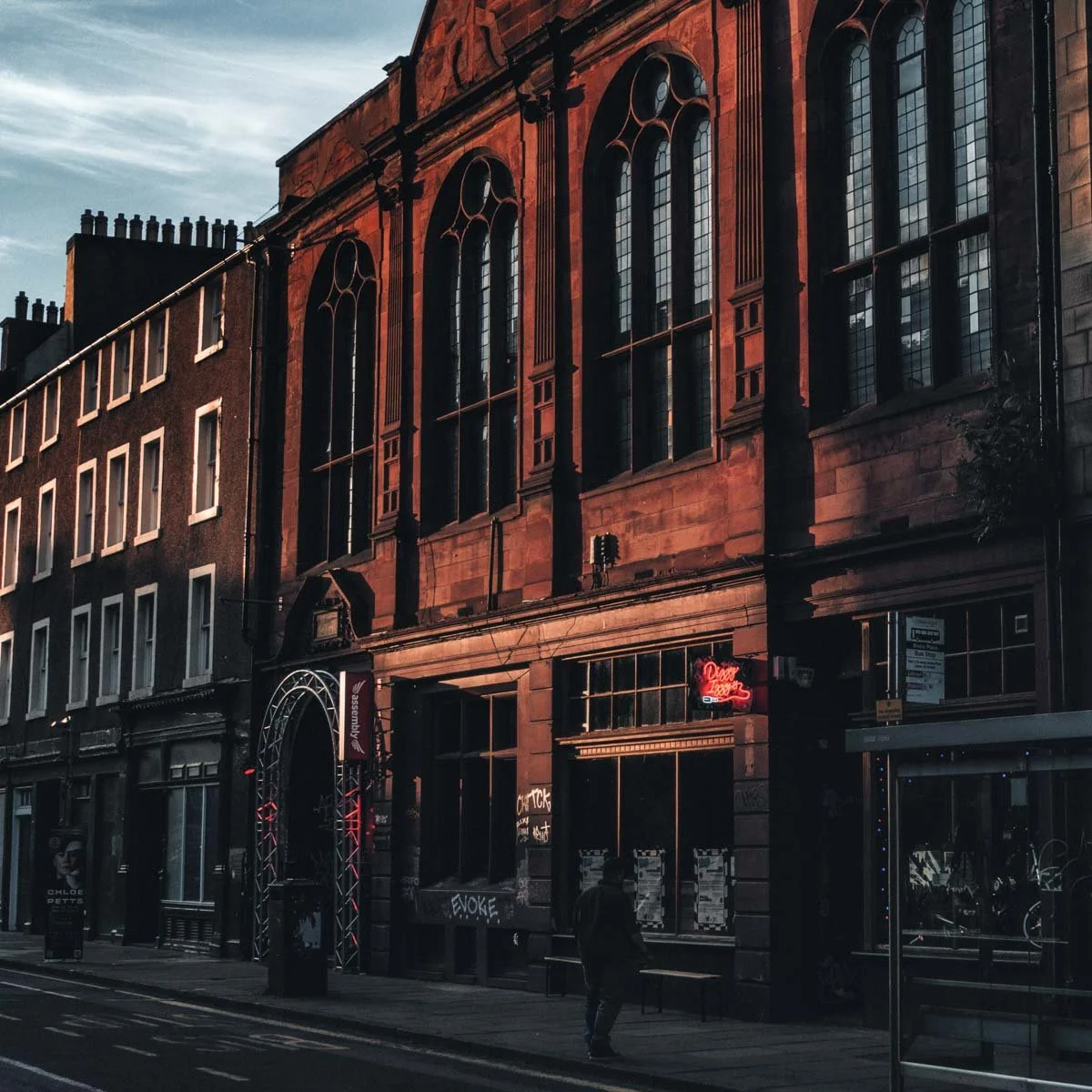
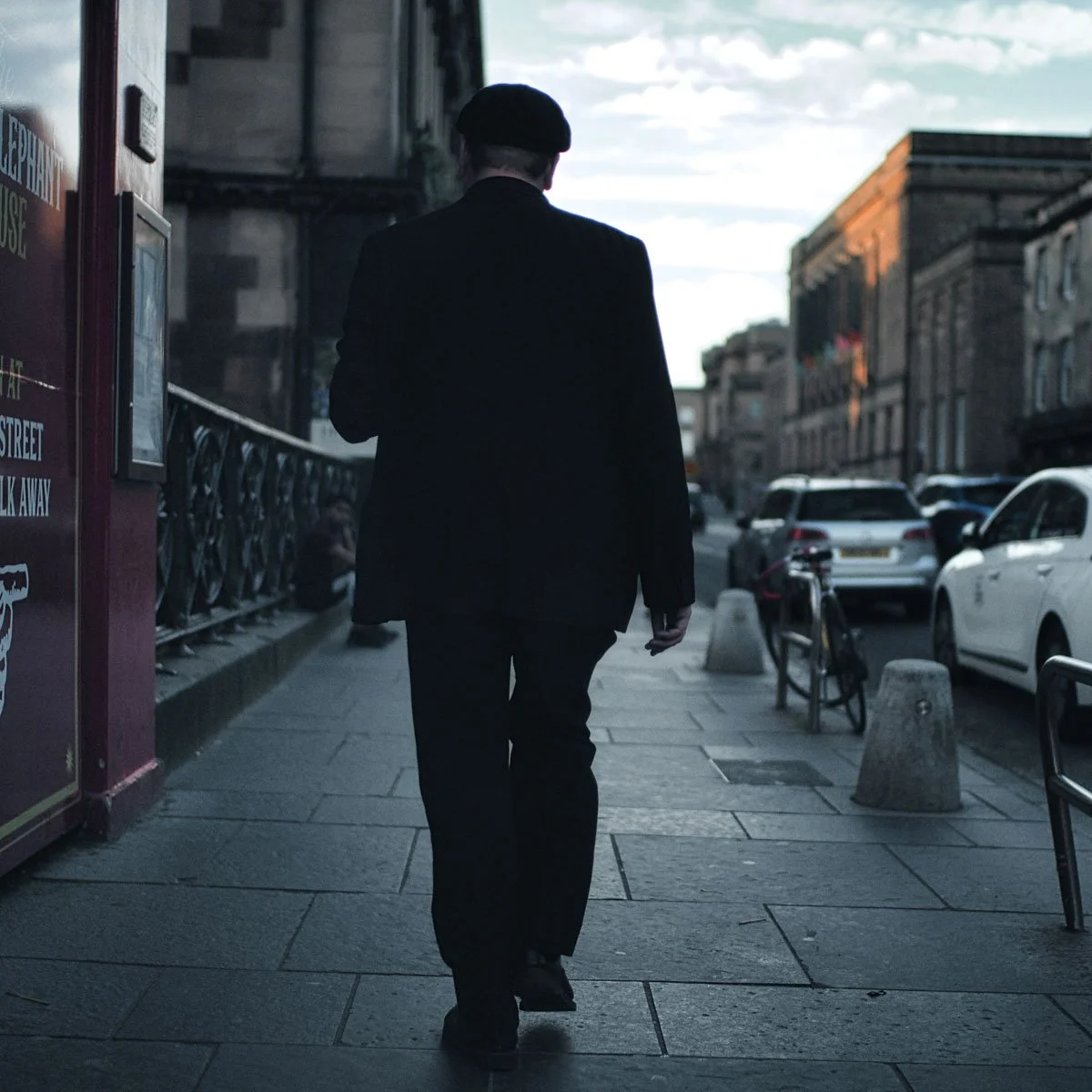
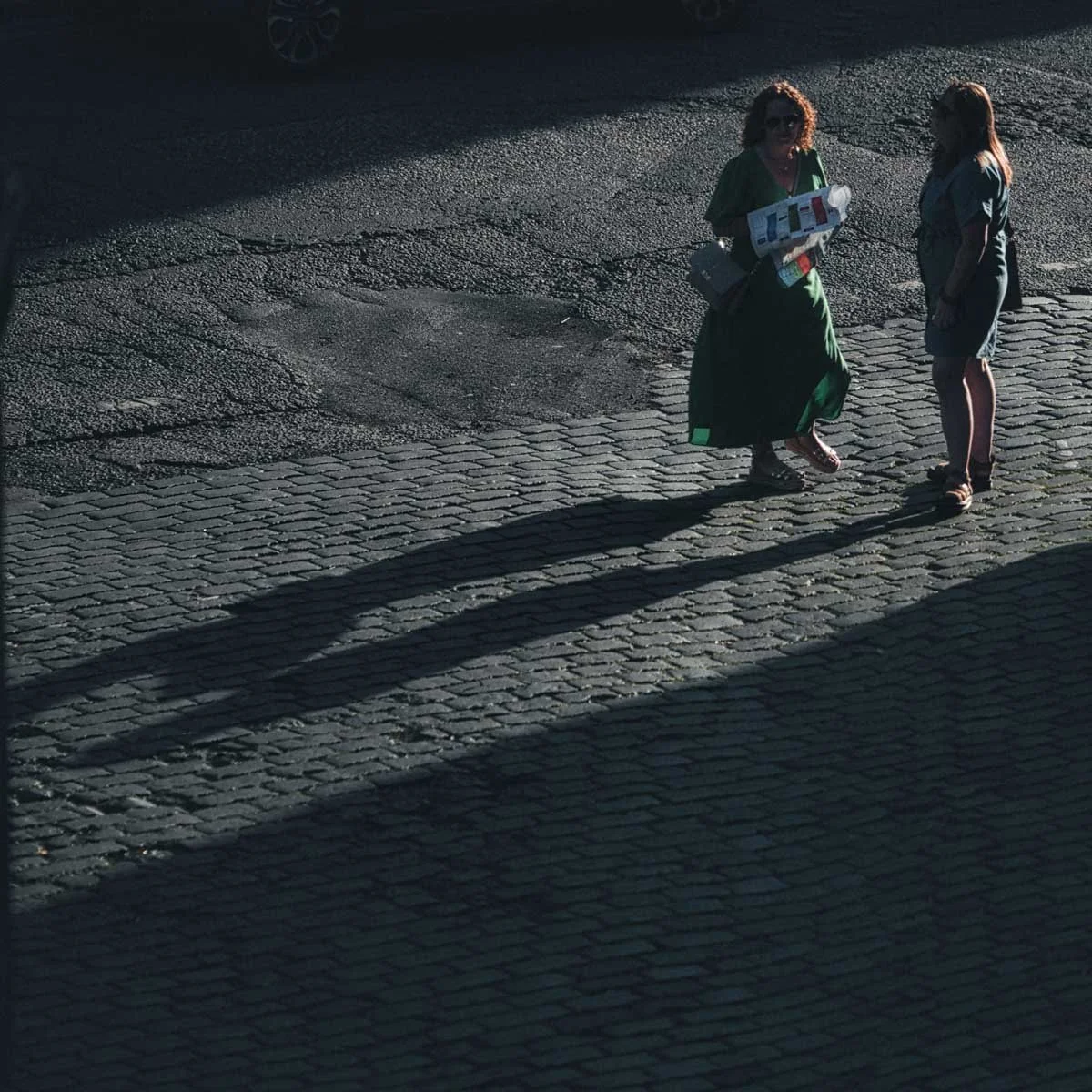
These photographs were made around Candlemaker Row, George IV Bridge and the area surrounding the National Museum of Scotland. The light in July sits low enough to carve the streets into simple shapes. Walls become planes, shadows stretch and people move through them for a second and then disappear. That’s the whole structure here.
Movement Through Space
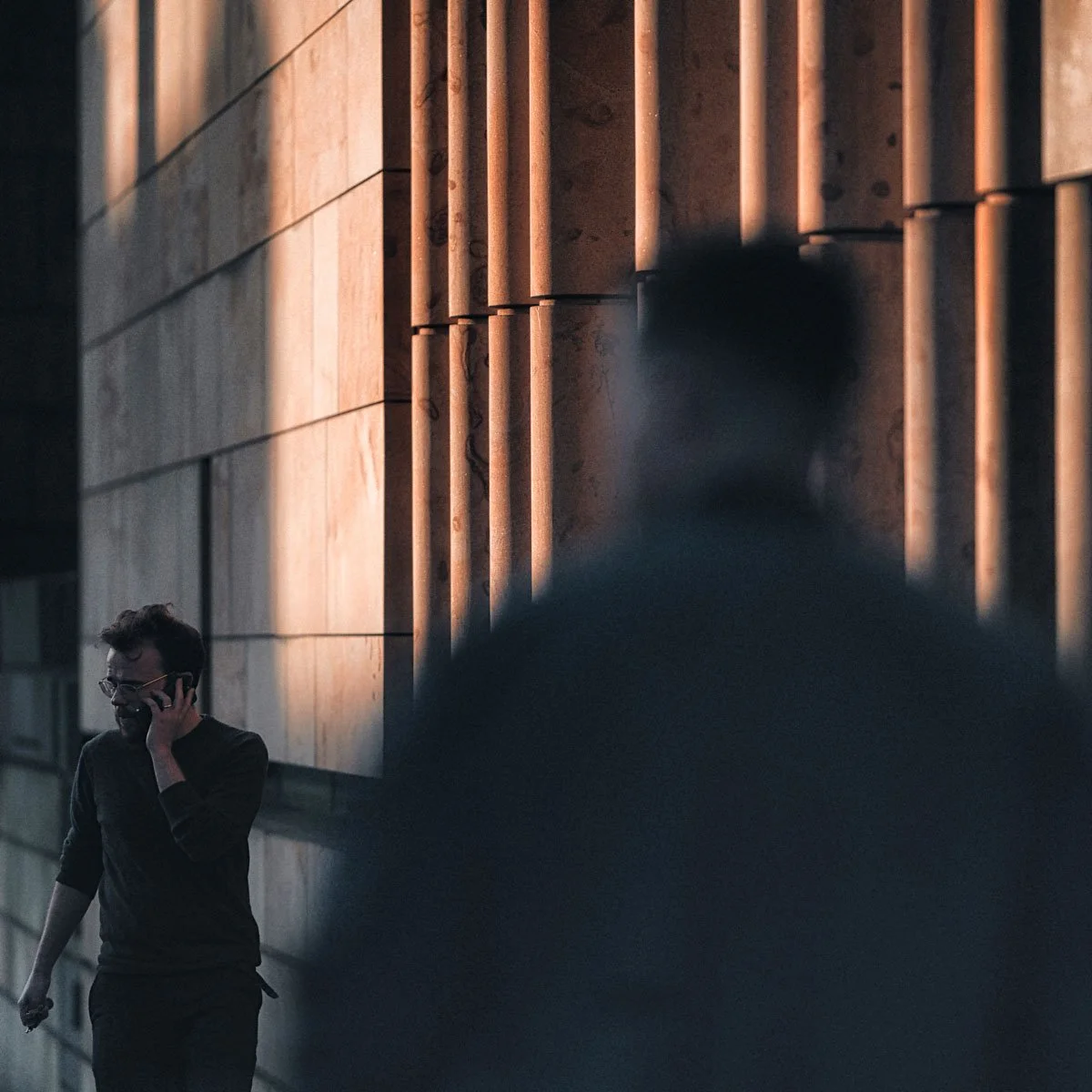
There’s no narrative in a traditional sense. No beginning or end. Just fragments of movement and small interactions between light and the city. Two people stopping mid-conversation. Someone passing through a strip of light. A shadow arriving before the person who casts it. These moments don’t ask for attention. They’re easy to miss and even easier to ignore.
The approach is the same as always: stay still, observe, wait. The city does the rest. Edinburgh is predictable in a useful way. Stone surfaces, narrow streets and changing elevation create consistent patterns of light. Once you recognise them, it becomes less about searching and more about positioning.
Reduction and Timing
Most of these frames rely on reduction. Fewer elements, clearer separation, and a single point of focus. When it works, the photograph holds without explanation. When it doesn’t, it just looks like a busy street. There’s not much middle ground.
Foregrounds appear in a few frames, but they’re not there to add complexity for its own sake. They’re used to compress the scene and isolate what matters. Same with colour. It’s present, but controlled. The work leans towards restraint rather than impact.
What’s left is a set of observations built around light and timing. Nothing staged, nothing repeated. Just a few seconds where everything aligned enough to be worth keeping.